Quick answer
The klein curacao boat wreck is a beached cargo vessel that ran aground decades ago on the island's northeastern coast. The wreck is accessible free of charge to visitors who book a commercial boat excursion to Klein Curaçao; the island has no entrance fee, but no public ferry operates year-round. Most operators depart between 06:45 and 09:00, allowing several hours to explore the wreck and surrounding beaches before afternoon return crossings.
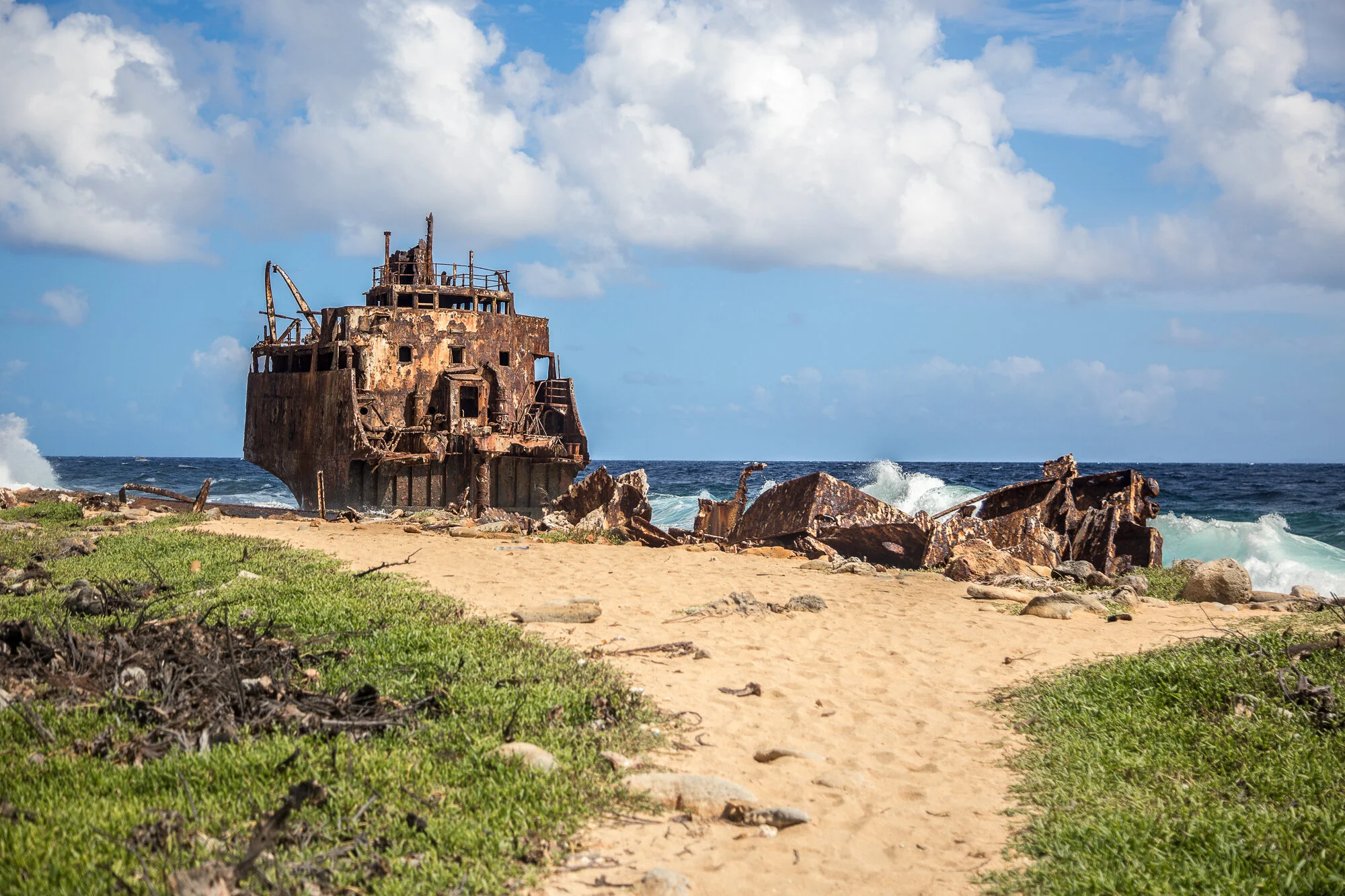
The shipwreck on Klein Curaçao is a 56-meter steel-hulled freighter that grounded on the island's exposed northeastern reef in the late 20th century. Decades of salt spray and Caribbean sun have oxidized the vessel into a rust-orange skeleton, its bow section collapsed onto the sand and stern still partially submerged at high tide. The wreck sits approximately 200 meters from the island's historic lighthouse, separated by a stretch of coral rubble and low scrub. Access to the klein curacao boat wreck is straightforward but requires advance planning. No scheduled public ferry serves Klein Curaçao; the island lies 10 kilometers southeast of Curaçao's mainland coast, exposed to open-ocean swells and crosswinds. Commercial operators run daily catamaran and motorboat excursions, typically departing from Spanish Water or Caracas Bay between 06:45 and 09:00. The crossing takes 60 to 90 minutes depending on sea conditions. Once ashore, visitors are free to walk the perimeter of the wreck, photograph its interior compartments, and wade into the shallow lagoon that has formed in its lee. The wreck's interior is accessible but unstable. Rusted bulkheads and deck plates present sharp edges, and the hull's structural integrity has deteriorated over decades of exposure. Most visitors photograph the vessel from the beach or wade into the shallow water surrounding the bow section, where coral colonies have begun to colonize the submerged steel. The northeastern shoreline where the wreck rests is fully exposed to the trade winds; afternoons bring gusts that kick up sand and make prolonged exploration uncomfortable. Practical considerations shape the visit. Klein Curaçao has no facilities—no shade structures, no freshwater, no shelter from the midday sun. Operators provide coolers and portable shade, but the wreck site itself offers no respite. Arrive with reef-safe sunscreen, a wide-brimmed hat, and closed-toe water shoes; the coral rubble surrounding the klein curacao boat wreck is sharp enough to puncture soft sandals. The island's isolation is absolute—no cell signal, no emergency services closer than the mainland. Plan your exploration around the boat's scheduled departure; missing the return crossing is not an option.
“Decades of salt spray and Caribbean sun have oxidized the vessel into a rust-orange skeleton, its bow section collapsed onto the sand and stern still partially submerged at high tide.”
Historical Context of the Klein Curaçao Boat Wreck
The klein curacao boat wreck that defines the island's eastern shore is the Maria Bianca Guidesman, a Venezuelan oil tanker that ran aground in 1978. The vessel was en route from Venezuela to Aruba when it encountered navigational difficulties in the treacherous waters surrounding the uninhabited island. The captain attempted to anchor off Klein Curaçao's coast to assess mechanical issues, but strong currents and shallow reefs caused the ship to drift and ultimately beach on the limestone shore. Salvage efforts were deemed uneconomical given the remote location and lack of infrastructure. Over the decades, the Caribbean sun and salt air have stripped the hull to its iron skeleton. The tanker's bow section remains the most intact portion, tilted at a sharp angle where it first struck ground. Rust has painted the metal in deep ochres and reds, contrasting sharply with the turquoise shallows. Waves have carved through the stern, leaving only fragmented ribs and bulkheads. The wreck of the Maria Bianca Guidesman became a navigation landmark for local fishermen and tour operators throughout the 1980s and 1990s. Today, visitors approaching Klein Curaçao by catamaran spot the wreck from several hundred meters offshore. The deteriorated structure stands as the island's most recognizable feature, visible from nearly every vantage point on the small landmass. Sections of the deck have collapsed into the surf, creating tidal pools where sergeant majors and damselfish shelter among corroded steel beams.
The Venezuelan oil tanker Maria Bianca Guidesman runs aground on Klein Curaçao's eastern shore during a voyage from Venezuela to Aruba.
Salvage operations are abandoned due to the remote location and high costs, leaving the vessel to weather in place.
The wreck becomes a recognized navigation marker for regional fishing boats and early tour operators.
Accelerated corrosion reduces the stern to skeletal framework, while the bow section retains structural integrity.
Klein Curaçao gains popularity as a day-trip destination, with the tanker wreck serving as the island's primary landmark.
Continued tidal erosion fragments the hull further, though the bow remains a distinctive silhouette against the reef.
Photographing the Klein Curaçao Boat Wreck
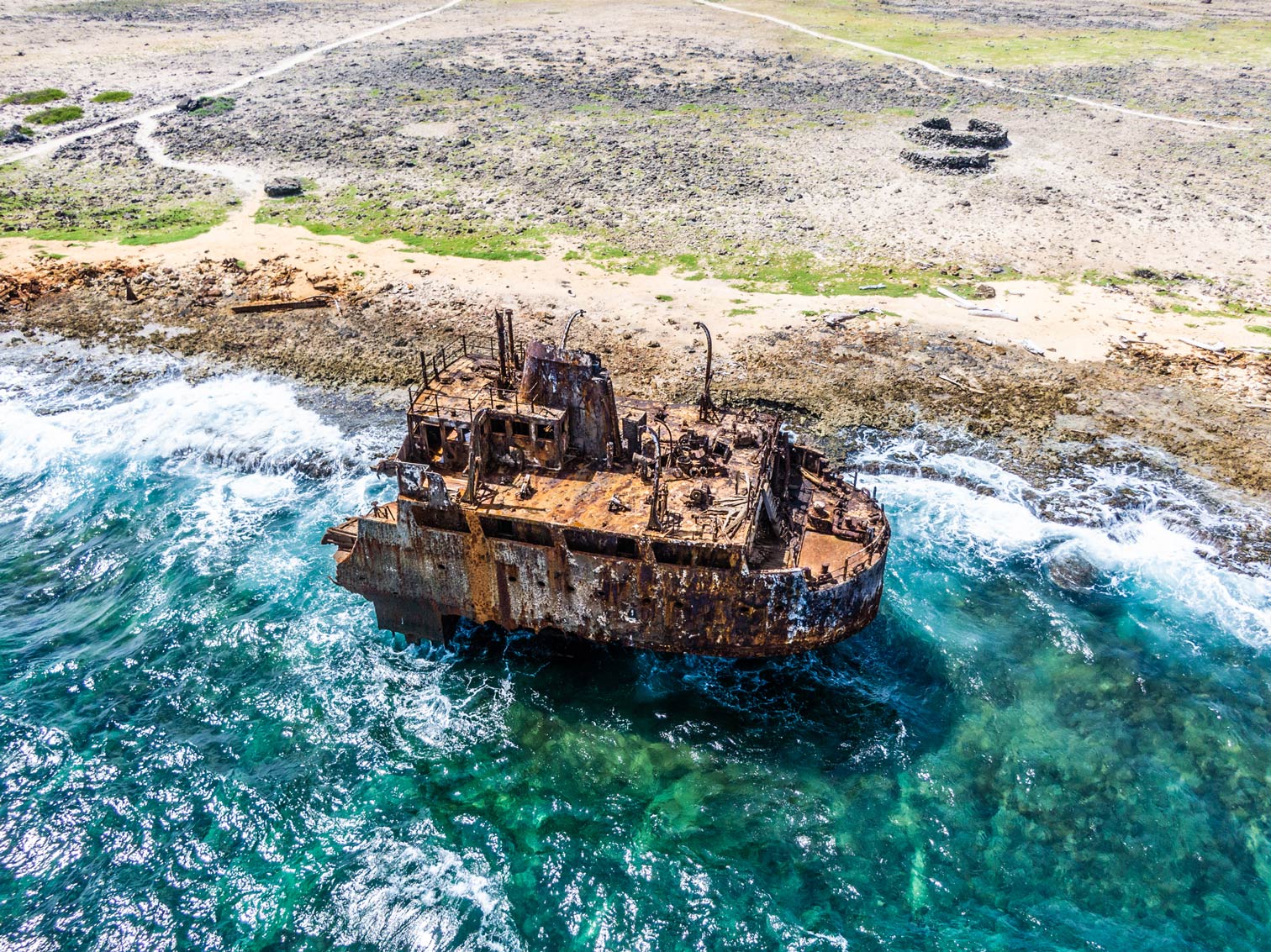
The Bow Silhouette
Position your camera at the water's edge during the morning hours to frame the rusted bow against the clear Caribbean sky.
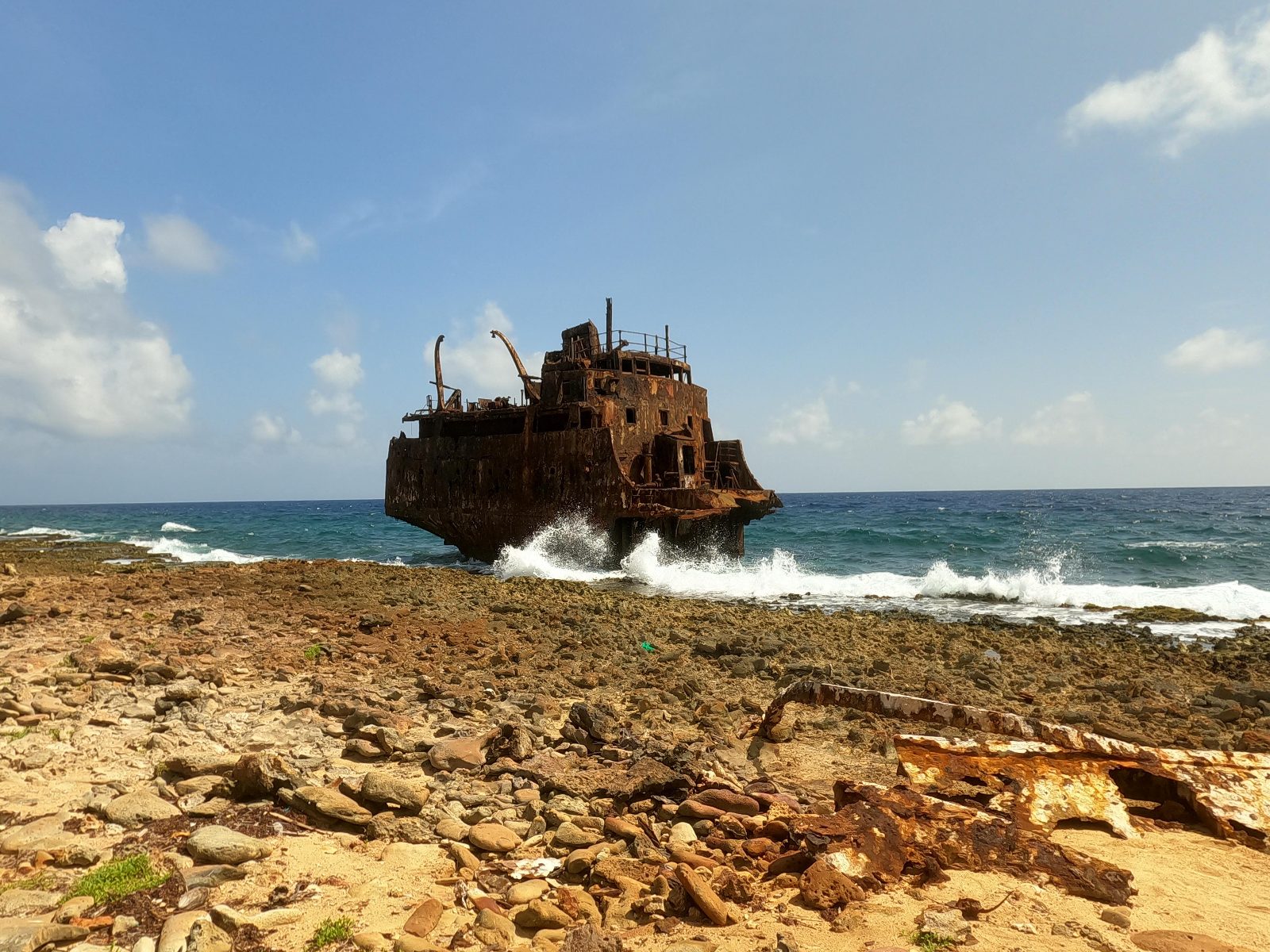
Shoreline Reflection
Stand on the sandy beach to the north of the wreck to capture the ship reflecting in shallow tidal pools.
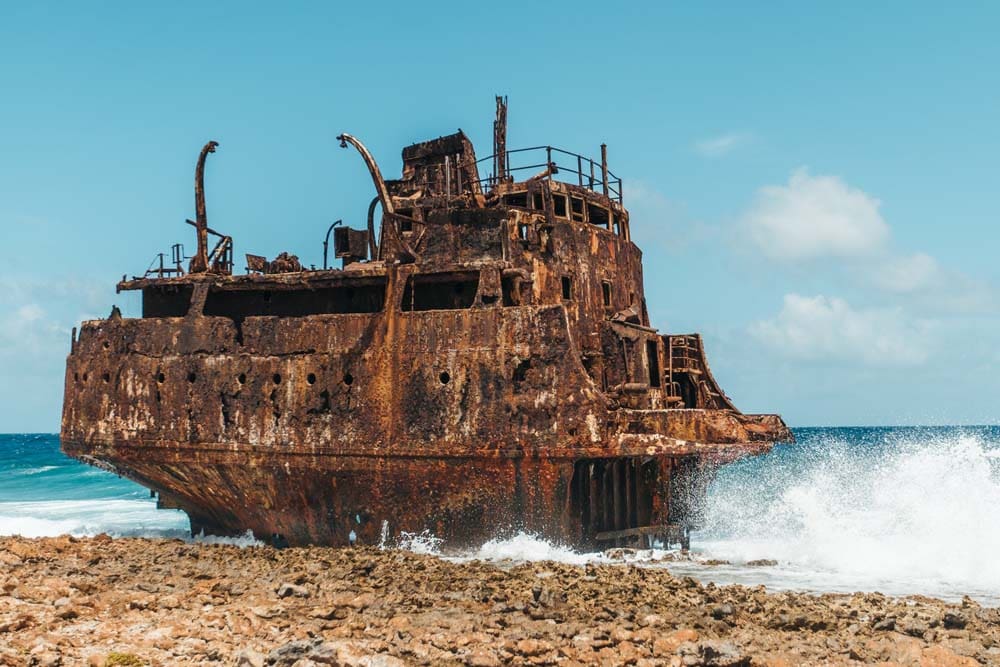
Panoramic Side View
Move inland towards the lighthouse trail to capture the full length of the hull against the turquoise backdrop.
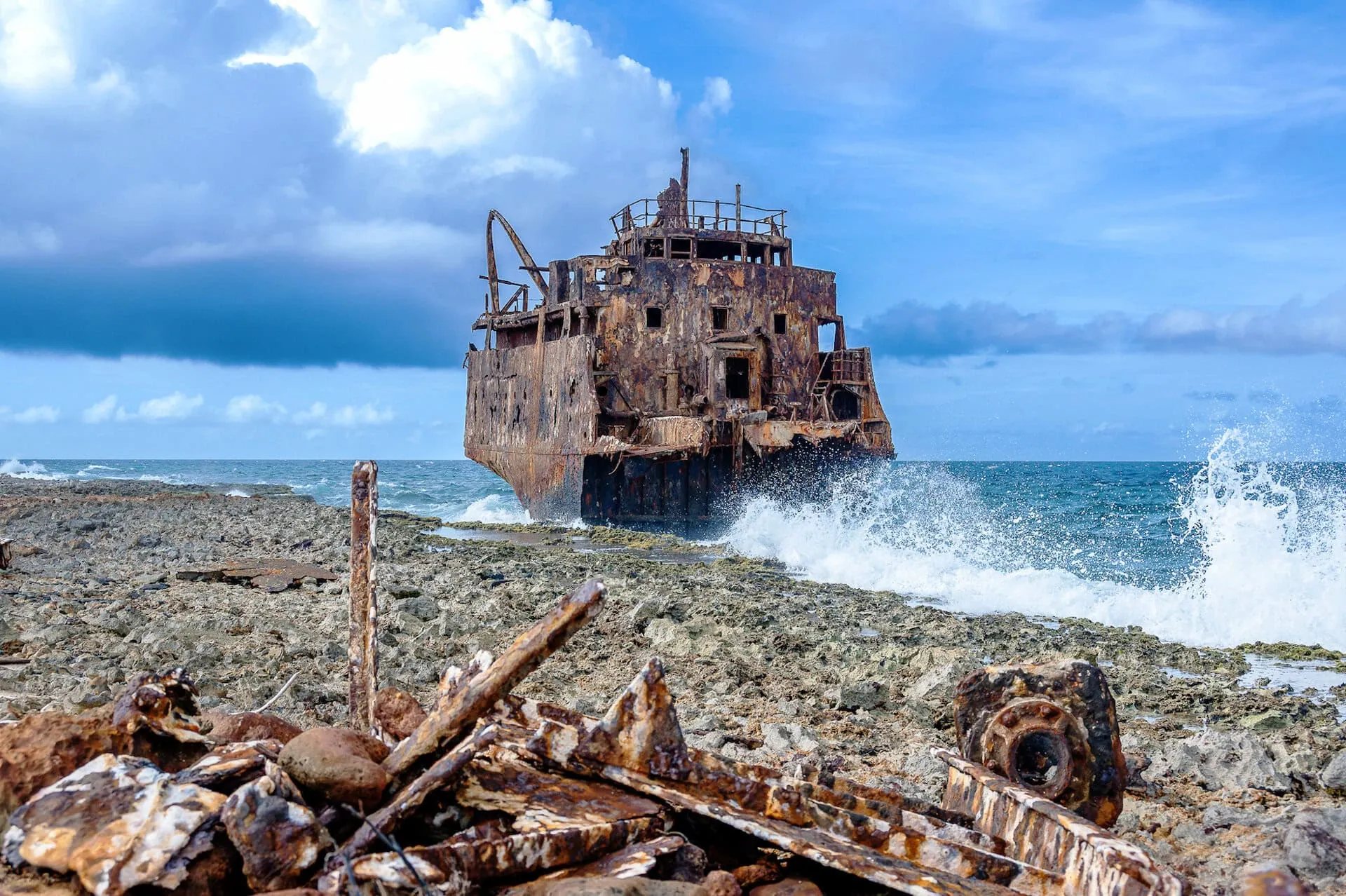
Rust and Texture Close-up
Approach the eastern side to focus on the corroded metal and salt-weathered textures contrasting with the blue sea.
Best Time to Visit the Klein Curaçao Boat Wreck
The best arrival window is 07:00–16:00 to avoid mid-day heat and ensure sufficient time to explore before afternoon boat departures. Visiting during this timeframe allows for cooler temperatures and quieter conditions at the wreck site.
Weekday mornings
Minimal congestion—
Early arrivals provide space before the main fleet lands.
Peak season (Dec–April)
High trafficDry with average 28°C
Expect more visitors and consistent trade winds.
Low season (May–Nov)
Moderate trafficWarmer with average 30°C
Often quieter, though humidity levels are higher.
Verdict: The best slot is a weekday arrival between 07:00 and 09:00 during the months of May or November.
Operating Hours for Accessing the Klein Curaçao Boat Wreck
The Klein Curaçao boat wreck is accessible daily according to the island's standard operating hours. These hours dictate the timeframe during which visitors may remain on the island before scheduled boat departures.
| monday | 06:45–17:30 | |
|---|---|---|
| tuesday | 06:45–17:30 | |
| wednesday | 06:45–17:30 | |
| thursday | 06:45–17:30 | |
| friday | 06:45–17:30 | |
| saturday | 06:45–17:30 | |
| sunday | 06:45–17:30 |
Entrance Fees and Access to the Klein Curaçao Boat Wreck
There is no cost to view the boat wreck on Klein Curaçao, as the island is a public area. Access to the island requires the purchase of a commercial boat excursion.
While the wreck is free to view, visitors pay for the boat passage, which varies depending on the chosen excursion provider and included amenities.
Check availability
Frequently asked questions about klein curacao boat wreck
Everything you need to know about klein curacao boat wreck